Categories
Uncategorized

CURFEW

Directed by Shawn Christensen (2012)

 The film is based on how a child saves a man from suicide.

At the lowest point of his life, Richie gets a call from his estranged sister, asking him to look after his nine-year old niece, Sophia, for a few hours. The few hours he will spend babysitting her will change Richie’s fate forever.
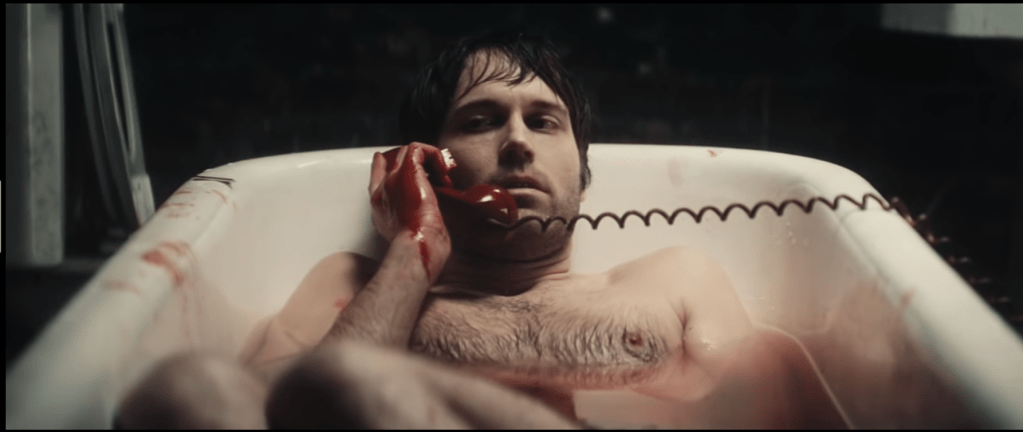
 Emotional protagonist suffering form depression (some degree of relatability from audience – uses and grats). Stereotypical representation of disability (ie: mental illness), as Richie is seen struggling to find a reason to live and therefore turns to self harm and contemplating suicide. Representation of youth/childhood (ie: his niece) which is counter typical at times, as his niece is shown to be quite authoritative in contrast to her uncle Richie). Audience feels sympathetic towards Richie (uses and grats). The theme and certain graphic scenes of the short film indicates its targeted for an older audience.The dark low key lighting and dull mise-en-secne wouldn’t attract a younger audience anyway.

BOWLING ALLEY

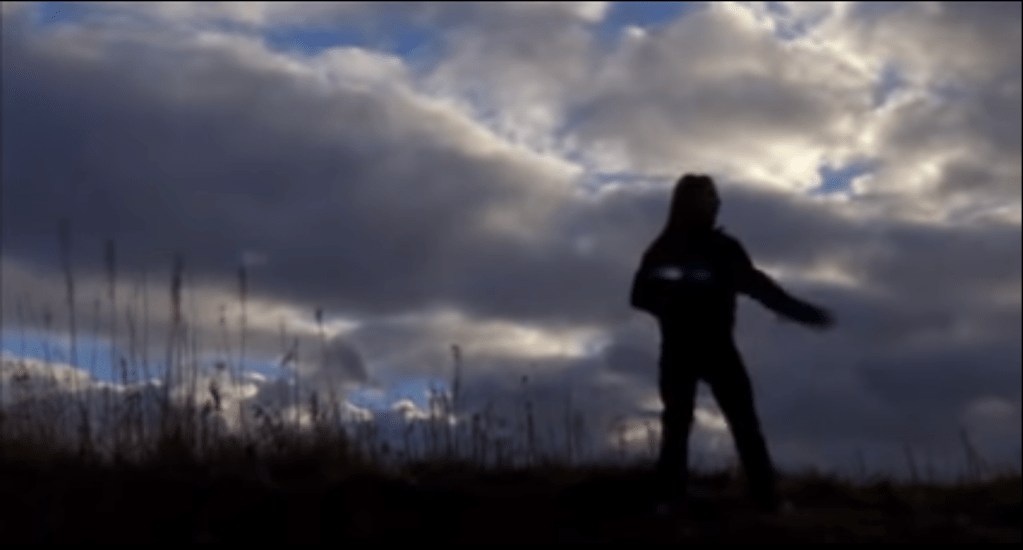
“Sophia starts dancing by herself down the alley, as all of the patrons of the bowling alley begin to snap and tap their feet, in unison. Dreamy and surreal, the scene is beautifully imagined and realised. Richie, lost in his own demons, stares around him at the happy dancers all over the bar, and he is so far from being capable of happiness. It is eloquent in terms of portraying his ultimate isolation. But there is also the heart-tugging reality that he is coming back to life himself. That small dancing girl in the bowling lane is someone he has missed, someone he wants to know. Taking care of her gives him a purpose. That red rotary phone on his bathroom floor is not just a telephone. It is a literal lifeline.” – Politico

CHARACTERS

We are instantly made to emphasise with the main character. As we see him laying in the bath, somewhat lifeless, we automatically cause an allegiance with him, wanting the best outcome for him in the end. his approach to life reflects his mental health, and as an audience member, we often seek the best for those characters who seem vulnerable.

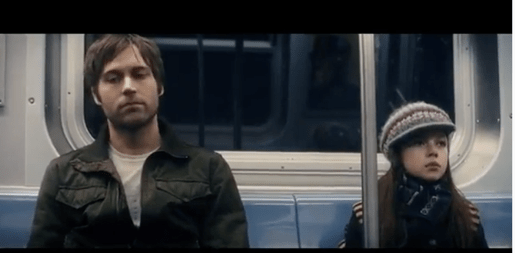
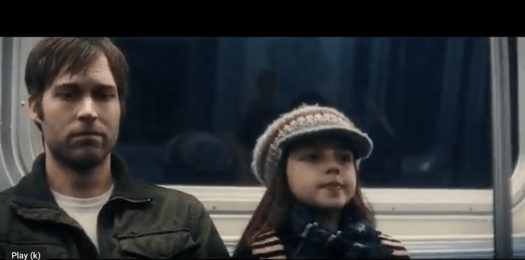
In the beginning, the young girl almost acts like every other smart child, mildly annoying and extremely talkative. however, as the plot develops, we see that she is truly curious, wants to know whats going on with her uncle, just as much as we do. Her character doesn’t change much through the film, its our understanding of her character and how the main character perceives her character changes.
NARRATIVE

The narrative follows a cyclical nature, through the use of repetition.
Categories
Uncategorized

ABOUT A GIRL

2001

Brian Percival – Social Realist Drama.

About a Girl is a witty film. The crux of its success lies in the clever layering of ideas, the repeated interrupting scenes and an ending that subverts the girl’s flippancy.

NARRATIVE

The film’s fractured narrative is deceptively simple. A single journey along the canal is interspersed with scenes that increasingly hint at the issues of the main character. There is really only one Act: the journey, with the reveal at the end.

THE TITLE

The title is quite broad. it doesn’t specify a niche in which we will be exploring, its more of a general statement. this has a power impact, it suggests that its a reoccurring thing thats happening young girls across the UK.

DOCUMENTARY STYLE

Cinematography

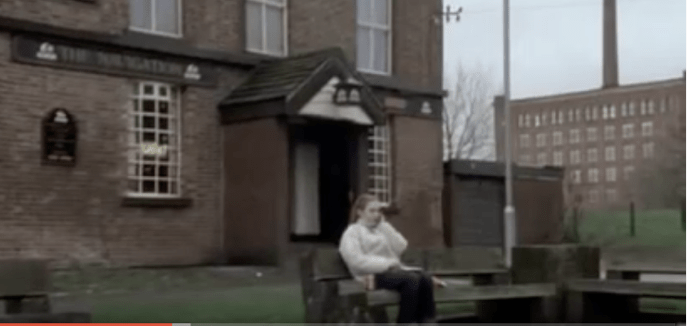
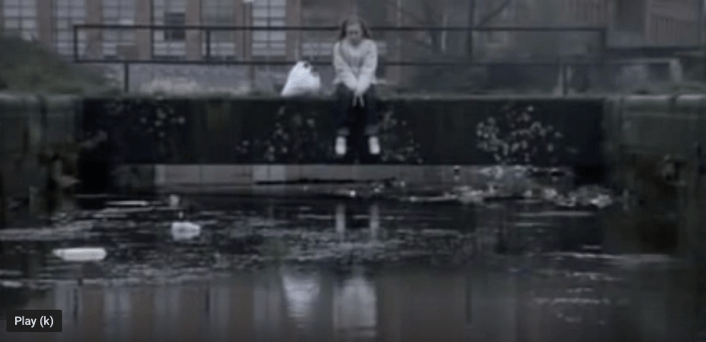
Medium shots, hand held camera instead of professional HD cameras. This creates an effect that we are actually there, listening to her monologue. This makes feel more personal and sympathetic to her situation. There were also a couple of long shots of her holding the plastic bag. It’s as if she is slowing fading away as no one cares about her nor notice her. 

Mise-en-scene

Wearing a puffer jacket, typically worn by young girls like her. It reminds the audience compare to how she looks and acts she’s still a young girl. 

Editing

Throughout this film there was a lot of cross cutting between the monologue and scene which relates to what she is talking about; for instance the fact that she wants to be a singer and her singing on the bus with her friends. This creates a more interesting effect for the film compared to a boring 5 minute film. Also the cuts that were used sometimes showed her actual emotions and things that she may not have seen herself for example the worried look from her mum from behind. 

Sound

Throughout the film it was mainly diegetic sound of her doing her monologue

DIRECTOR

The director has use this choice of lyrics because throughout the film you don’t actually hear about her real emotion about what she has just been through and the neglect of her parents. The lyrics relate to her situation and are likely to reflect what she is feeling currently, for example at one part of the song she sang “you are the thing that I can’t take care of, no more. But now I am stronger than yesterday”. This part of the lyrics shows that the young girl has now been through one tough challenge and through that she can become even stronger.

SHOTS

Long shot conveys her isolation

Move from hand held to the long shot conveying her isolation, the mise en scene reflects the poverty.

Utter shock of the site.

FINAL SCENE

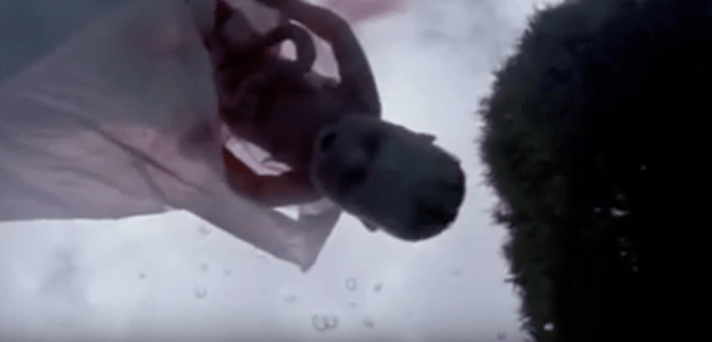
Stating that she has become “good at hiding things”, she throws the plastic bag she has been carrying into the canal.

Categories
Uncategorized

THE GUNFIGHTER

‘What if you could hear the narrator?’

NARRATIVE

“In a small town in the old west, a lone and weary gunfighter enters a saloon. As he walks through the room surrounded by the people of the town, a voice begins narrating the scene, telling us exactly who this gunfighter is.

But unlike every classic western to use the narrator trope, the characters in this film can hear the voice. This omniscient narrator quickly begins divulging the deepest, darkest secrets of the people in the saloon. He exposes infidelity, homosexuality, prejudice and even a bit of bestiality. As the story unfolds it becomes evident that the voice is a bloodthirsty bastard that wants nothing more than to see the people of the town kill each other in a needless gunfight.” – MAGNETFILM

BACKGROUND

  • The film cost just under $25,000 and was inspired by Western TV series Deadwood. 
  • Voice over: narrated by Nick Offerman 

GENRE

The generic conventions of a western usually involve:

  • Bar fights
  • Guns
  • Low key lighting (inside)
  • Ominous music

The concept of the film is extremely unique. It intertwines the conventions of both western and comedy in order to create this short film. The way the film explores the concepts that viewers would classify as “external” issues such as background music, are spoken about within the film, gives it a feel of a sitcom.

Categories
Uncategorized

HIGH MAINTENANCE

Phillip Van, 2006

NARRATIVE

The narrative follows a simple three act structure:

1. Jane is unhappy with her current model and eventually deactivates him. 

2. Jane orders a replacement model from the company and sends off her old model with a kiss. 

3. Paul seems to meet all of Jane’s requirements until she fails to meet his.

MISE EN SCENE

CLOTHES

The clothes are quite formal, almost representing the title of the film, high maintenance. however, they aren’t too made up, which is an extremely high contrast to the main point of the film and how vanity plays a huge part in society.

LIGHTING

The lighting is low key. the main centre of light is from the table, which illuminates the pairs faces as it focuses on them. the simplicity of the table is almost a high contrast to the pair, especially the woman.

SOUND

The emphasis of the chewing sounds makes the audience feel uncomfortable . It creates more tension between the pair and creates an atmosphere which makes the viewer question what is going on.

DECOR

The pair of placed on a long dining table, which creates a distance showing how the two are drifting apart.

THE SETTING

The female character is at the centre so we believe the story to be about her.

CAMERA WORK

  • It emphasises distance between the couple
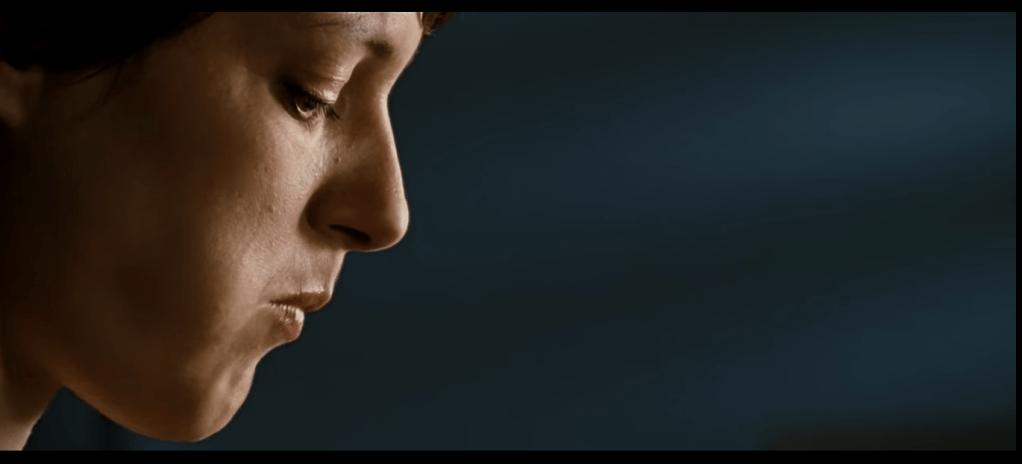
  • Close ups show the emotion of the characters- really just the female character.

THE BUTTON

As she goes to order a new model, the music is playful. it highlights how we are so unsatisfied with our day to day lives, and emphasises the power of technology and that our boredom is solved through a click of a button.

The modern desires explored through this scene show how we only seek physical attraction and ignore the other important aspects of a relationship.

THE TWIST

The twist in the narrative shows how her new model actually wanted freedom from her. he can now smoke indoors, which she protested strongly against, and watch football.

DIRECTOR

Van says, ‘I aimed to make a film about the future but emblematic of our era’. – He achieves this through the blunt nature of the film. The film is direct, and speaks openly about the selfishness of our desires, and how technology has blinded our visions of love.

Categories
Uncategorized

SWIMMER

SWIMMER is a poetic journey through the waterways and coastline of the British Isles, following a lone swimmer through lakes, rivers and coves. The journey is framed by a soundtrack of seminal British music, combined with a sound tapestry of hydrophonic recordings and snippets of bankside conversations. The film aims to give a real feel for the diversity of landscape and people of Britain.​

  • The film is one of 4 unique co-commissions in partnership between BBC Films, Film4 and the London Organisationing Committee of the Olympic and Paralympic Games.
  • BAFTA winner for Best Short Film for writer/director Lynne Ramsay​
  • The film is described as a “stream of consciousness” that follows a young man on an endurance swim through a shifting background of country rivers and urban waterways. 
  • As he cuts through the water old British songs play on an intelligently designed sound-track, intermingled with snatches of dialogue.​

CINEMATOGRAPHY

Shot by Argentinian cinematographer, Natasha Braier

Ramsay sent Braier a treatment for the film, along with a compilation of music she wanted to use and reference images as a starting point. “That’s the way she works, very organic and conceptual,” Braier comments. “The treatment was a piece of art in itself, with poetry and links to click so I could listen to these British songs she wanted to use. This was quite impressionistic, based on feelings.”​

TECHNICAL ELEMENTS

  • Working with tracks laid on the riverbank for the crane, which was extended up to 60 metres in the air. “Tracking along with the swimmer was probably the biggest technical thing in the piece. We had to find a place where he could swim in a straight line and somewhere solid to lay the track so the crane wouldn’t sink in mud.”​
  • Natural light was used for these scenes and Braier had to be in the right place to catch the sun at different times of day. “We scouted round and found the best spot for the crane,” she recalls. “We were also very lucky that it was a sunny day, but we had to time each sequence so the lighting was right for the different angles to shoot Tom from the side, back and front. Combined with only being able to have him in the water for two and a half minutes at a time it was a big challenge.”​

NARRATIVE

How does the swimming structure the piece?

It adds a sense of continuity, a cyclical feel to the film.

The film was shot in black and white, what influenced this choice?

It adds more of a stripped back feel to the film, it creates one central focus to the film.

How does the music work to structure the piece?

Sound: The extremely tense, and climatic music eventually fades into a gentle, soft piano. and we see him go back into the water

QUOTE:

“I’m sorry to trouble you, but we’re lost. We’ve had an accident”

Categories
Uncategorized

MESHES IN THE AFTERNOON

Directed by Maya Deren

1946

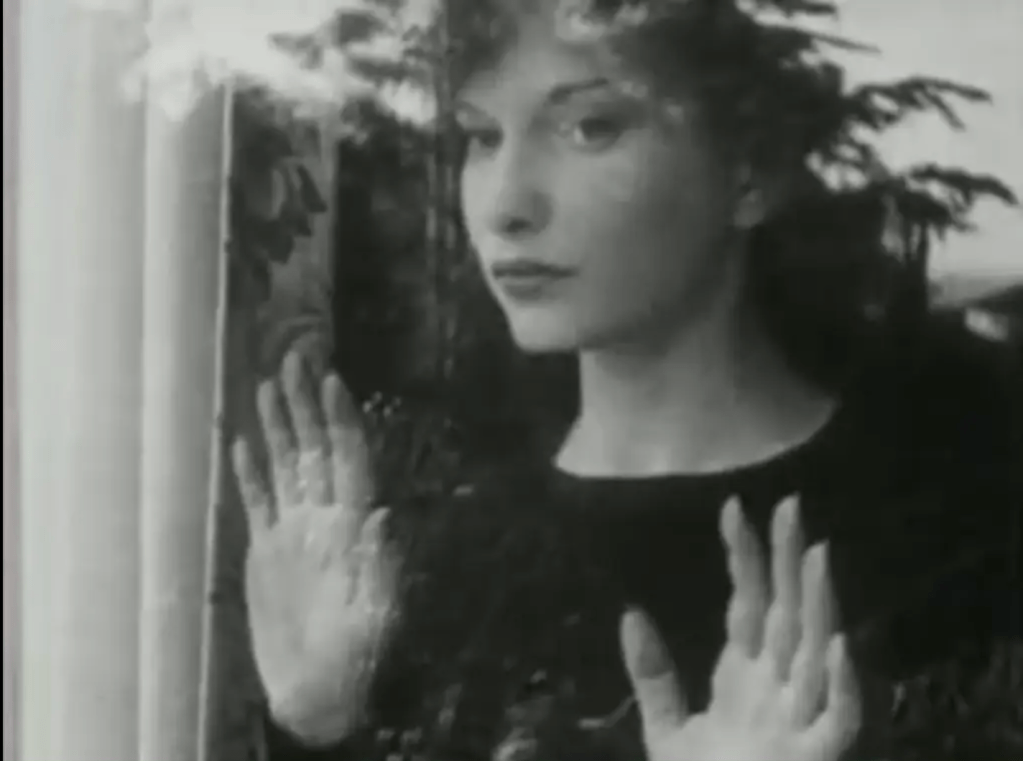
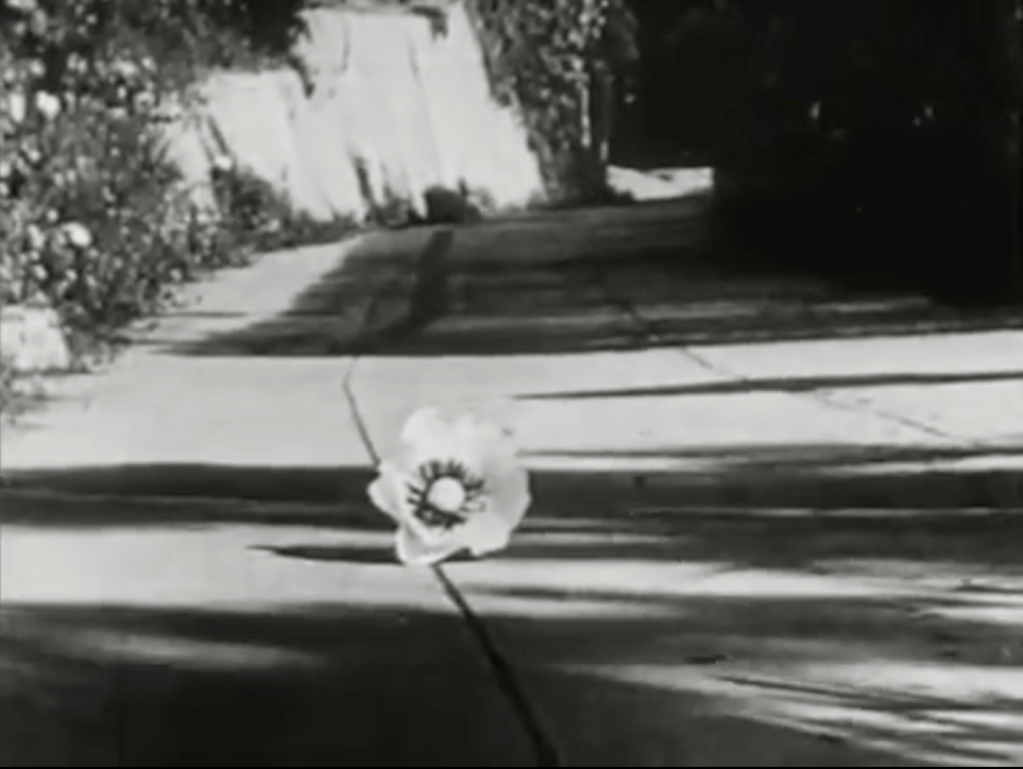
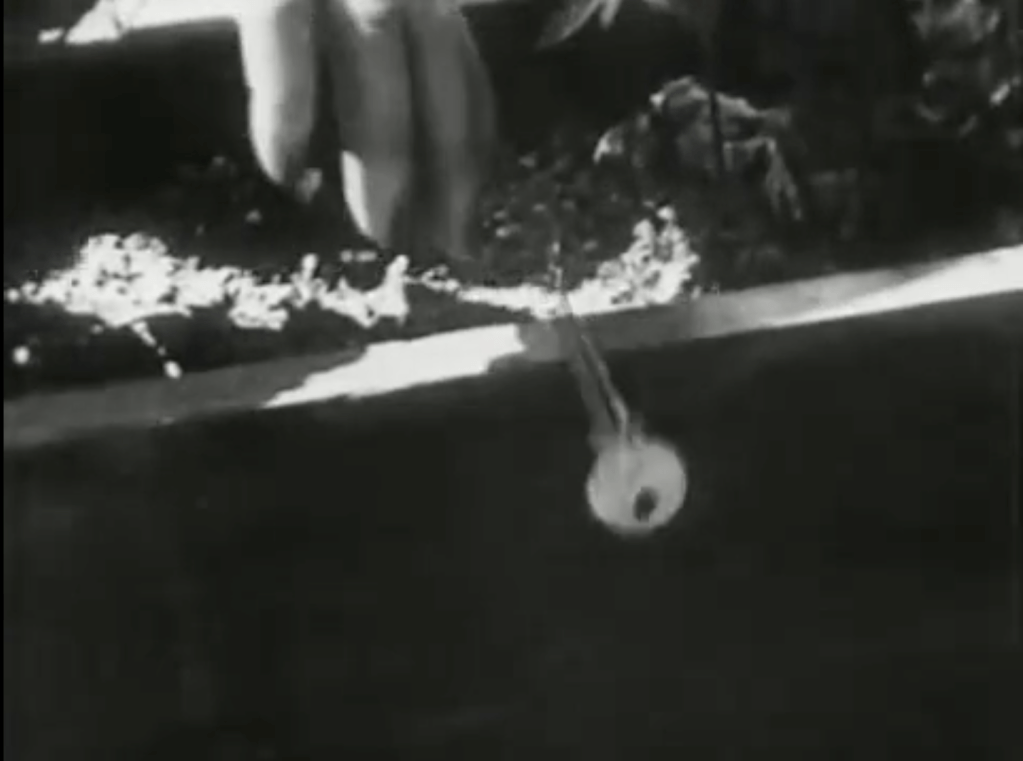
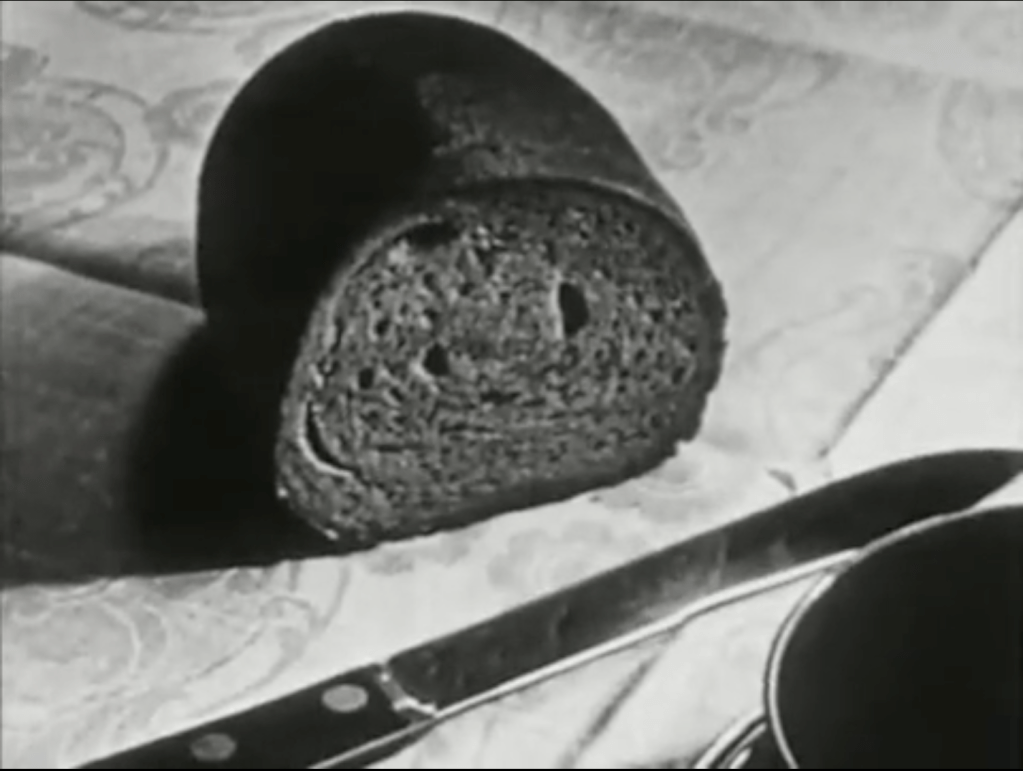
Meshes of the Afternoon (1943) is a short experimental film directed Maya Deren and Alexander Hammid who both also star in the film. The film’s narrative is cyclical and repeats several motifs, some of the significant ones being:

A flower on a long driveway

A key falling

A knife in a loaf of bread

Some of the other including:

  • A door unlocked
  • A mysterious Grim Reaper- like cloaked figure with a mirror for a face
  • A phone off the hook
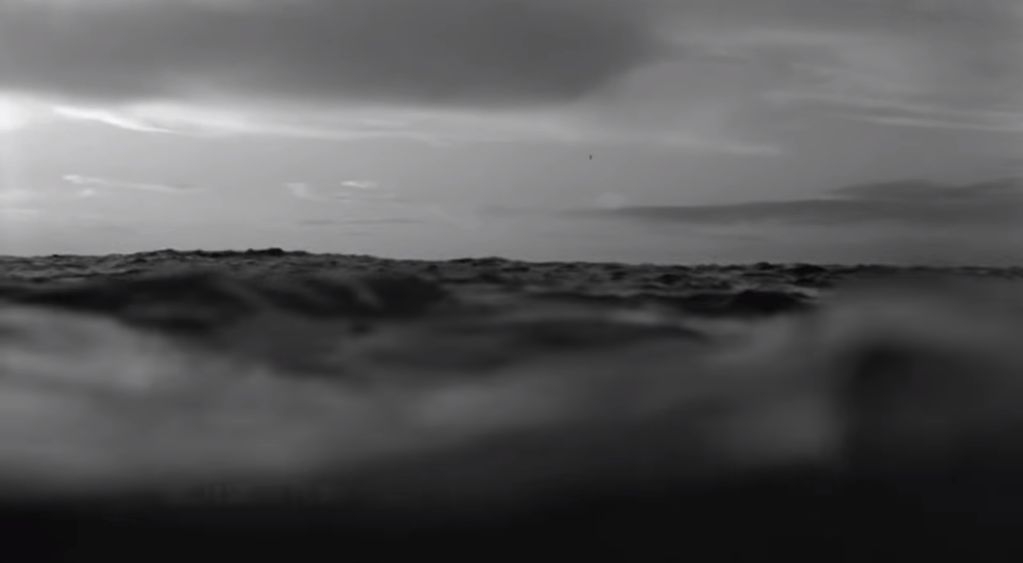
  • An ocean

Through creative editing, distinct camera angles, and slow motion, the surrealist film depicts a world in which it is more and more difficult to catch reality.

The film follows a woman going for a sleep, seeing repeated sequences of semi-disturbing images and events, she then awakes to find that they were really happening, and then her husband finds her dead, after using a broken mirror to kill herself.

The films narrative is extremely complex, it is non-linear. Due to the lack of dialogue, the audience members have to solely reply on the images in front of them to depict the narrative. The eerie music creates the overall atmosphere, its high pitched screeches only emphasise the disturbing imagery, almost reflecting the screeches the audiences imaging going through the woman’s head.

The plot is very ambiguous, members can almost alter the plot, much like you can a dream. audiences may either love or hate the film, it is extremely artistic and needs an extremely active viewing. therefore, I would most definitely recommend this film to someone who has a keen interest in very artistic and complex films. its plot is very memorable and uses black and white cinematography to show the harsh contrast between the good and evil presented in the film.

7/10

Categories
Uncategorized

PITCH BLACK HEIST

Directed By John Maclean

2012

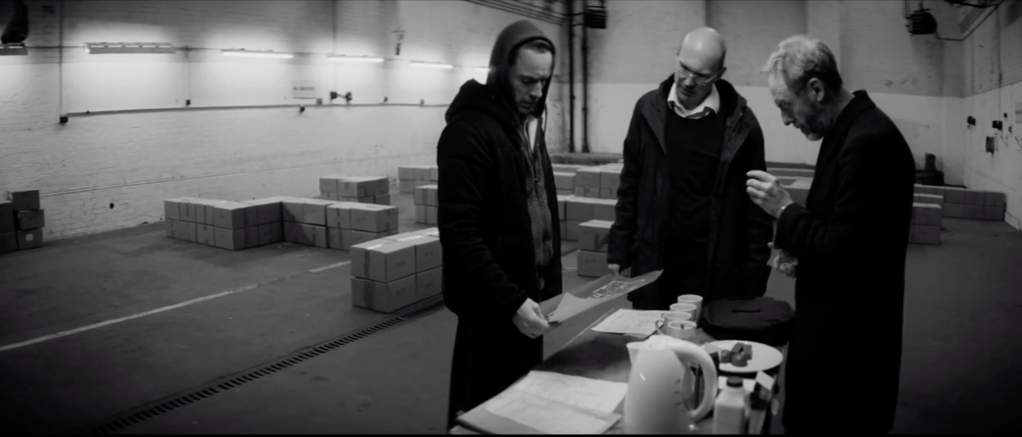
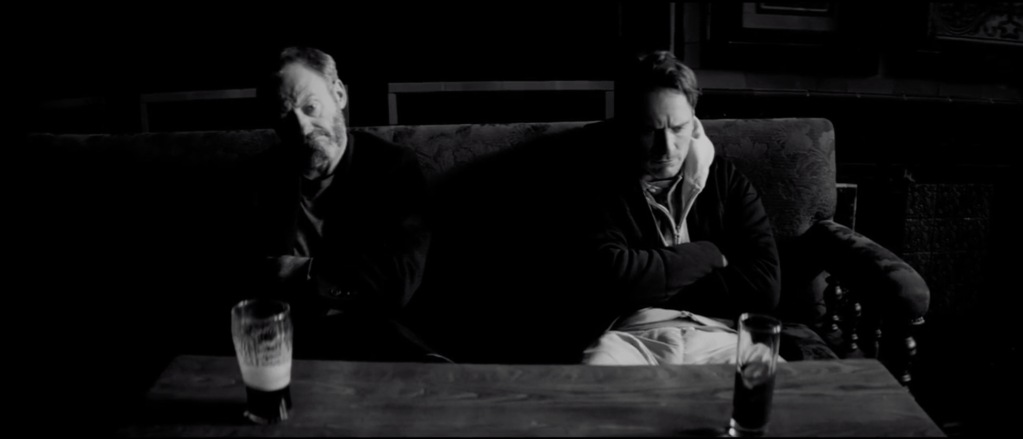
The short film, Pitch Black Heist documents two men prepping for a heist of a bank, and eventually proceeding with it. The film takes place in three distinct locations;

The Warehouse

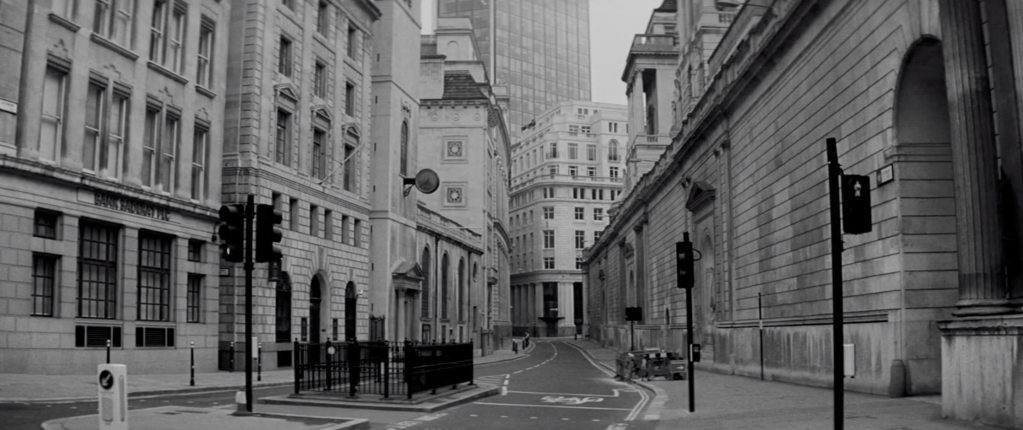
The Urban Outside

The Pub

Initially, the film is set in the warehouse. The men are being briefed in regards to the heist. the men are then told to await instructions, so to pass time, they go to the pub. Several hours pass and they eventually become tipsy – this leads to an exchange in life stories and their early experiences, it turns out they share some similarities. The heist takes place in warehouse, which just so happens to have a light activated alarm, therefore having to have a pitch black heist.

NARRATIVE TWIST

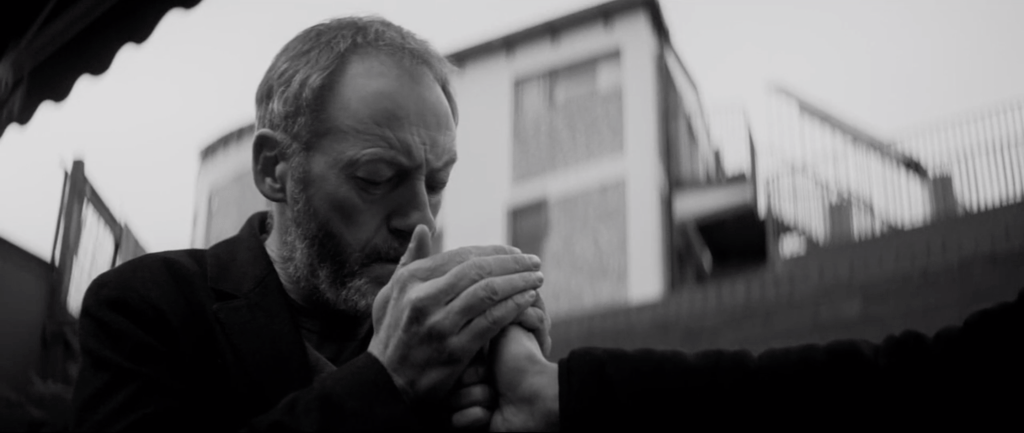
Michael leaves Liam in the warehouse, after lighting a cigarette, he sets the alarm off and leaves him in there.

THEORIES AND EXPLANATIONS

“ain’t got no ma, aint got no pa”

Early on the short film, Michael explains some of his early childhood issues, his dad waled out on him and his mum when he was young, his mother never recovering .

Through connection of comments and events, it can be found that Liam is his dad, and uses the heist as a way to convict and have him arrested in return for leaving him and his mother.

OPINIONS

In my opinion, I found this short film extremely enjoyable. Its use of witty, cynical humour mixed in with the raw emotion caused by a dysfunctional family. Specific shots such as the scene outside the pub, as they share a cigarette, which uses a tracking shot to control the dialogue, create such a raw atmosphere which could only be created through British filmography. the use of black and white colouring means the focus is on the two main characters. the black could represent the evil within Liam, and Michael too as some may argue that what he did was cruel. and the white could represent the good within the film, how Michael was trying to make Liam pay for what he did.

Overall, I would watch this film again. It was an easy to watch film, had a simple yet well-developed narrative which still caused the viewer to actively think about what was going on.

7/10

Design a site like this with WordPress.com
Get started